Scheid Filho, R, Eckhard D, Gonçalves da Silva GR, Campestrini L.
2016.
Application of Virtual Reference Feedback Tuning to a non-minimum phase pilot plant, Sept. 2016 IEEE Conference on Control Applications (CCA). :1318–1323., Buenos Aires: IEEE
AbstractVirtual Reference Feedback Tuning (VRFT) is a data-driven technique used to design controllers without the need of a process model, only input-output data is utilized. When the process has non-minimum phase (NMP) zeros, the original method usually presents poor performance, because scarcely the reference model has the same NMP zeros as the process. To overcome this problem, a flexible criterion has been proposed to the VRFT method, in a way that both the controller parameters and the NMP zeros of the process are estimated together. In this paper we present the application of the VRFT method with flexible criterion to the level control of a MIMO pilot plant. We show that a sequential controller design may incorporate NMP behavior to the process. We then use the VRFT method with flexible criterion to design the controller using only closed-loop data from the process.
Mendez, M, Haas AN, Rados PV, Sant'ana FM, Carrard VC.
2016.
Agreement between clinical and histopathologic diagnoses and completeness of oral biopsy forms, Aug 22. Braz Oral Res. 30:e94., Number 1
AbstractThe present study aimed to assess the rate of agreement between clinical and histopathological diagnoses and to report the frequency of completed forms for specimens that were subjected to histopathological examination and retrospectively examined. Data from 8,168 specimens submitted to histopathological examination were retrieved from the records. A total of 5,368 cases were included. Agreement was defined based on the definition of lesion nature according to its diagnostic category. Sensitivity, specificity, and positive and negative predictive values were calculated for each diagnostic category. The highest rate of agreement was observed for periapical lesions (92.6%), followed by potentially malignant disorders (90.1%) and non-neoplastic proliferative disorders (89.3%). Low rates of histopathological confirmation of the clinical impression were observed for mesenchymal tumors (25.0%) and cysts (44.2%). Sensitivity values were > 0.70 for all lesions, except for cysts (0.51). Specificity was relatively high, ranging from 0.97 to 1.00. The frequency of incomplete biopsy forms ranged from 16.8% (malignant tumors of oral mucosal epithelium) to 51.0% (nonspecific inflammatory reaction). The most frequently completed biopsy forms corresponded to epithelial malignant tumors (83.2%) and glandular inflammation (72.3%). In conclusion, there was an acceptable level of agreement. The low level of completeness of biopsy forms indicates little awareness about the relevance of gathering detailed information during clinical examination.
Carvalho, E.
2016.
An actionist approach to the justificational role of perceptual experience. Revista Portuguesa de Filosofia. 72((2-3)):545-572.
Abstract In this paper, I defend an account of how perceptual experience can bear rational relation to our empirical thought. In the first part, I elaborate two claims that are central for the justificational role of perceptual experience, namely, the claim that perception and belief share the same kind of content, and the claim that perception is independent from belief. At first sight, these claims seems not to be compatible, since the first one seems to require the truth of content conceptualism, while the second one seems to require its falsity. In the second part, based on Alva Noë's actionist theory of perception, I argue in favor of a less intellectualist interpretation of the first claim, uncommitted to content conceptualism, and then I show how it can be reconciled with the second claim. Finally, I explain how perception holds rational relationships with our empirical thought through the exercise of observational concepts. These concepts link what I propose to call ‘space of actions’ to the logical space of reasons.
Visi, F, Coorevits E, Schramm R, Miranda E.
2016.
Analysis of Mimed Violin Performance Movements of Neophytes. Music, Mind, and Embodiment: 11th International Symposium, CMMR 2015, Plymouth, UK, June 16-19, 2015, Revised Selected Papers. LNCS 9617(
Kronland-Martinet, Richard, Aramaki, Mitsuko, Ystad, Sølvi, Eds.).:88–108.: Springer International Publishing
Abstract
Demétrio, NB, Baeninger R, D'ANTONA Á, Dagnino R.
2016.
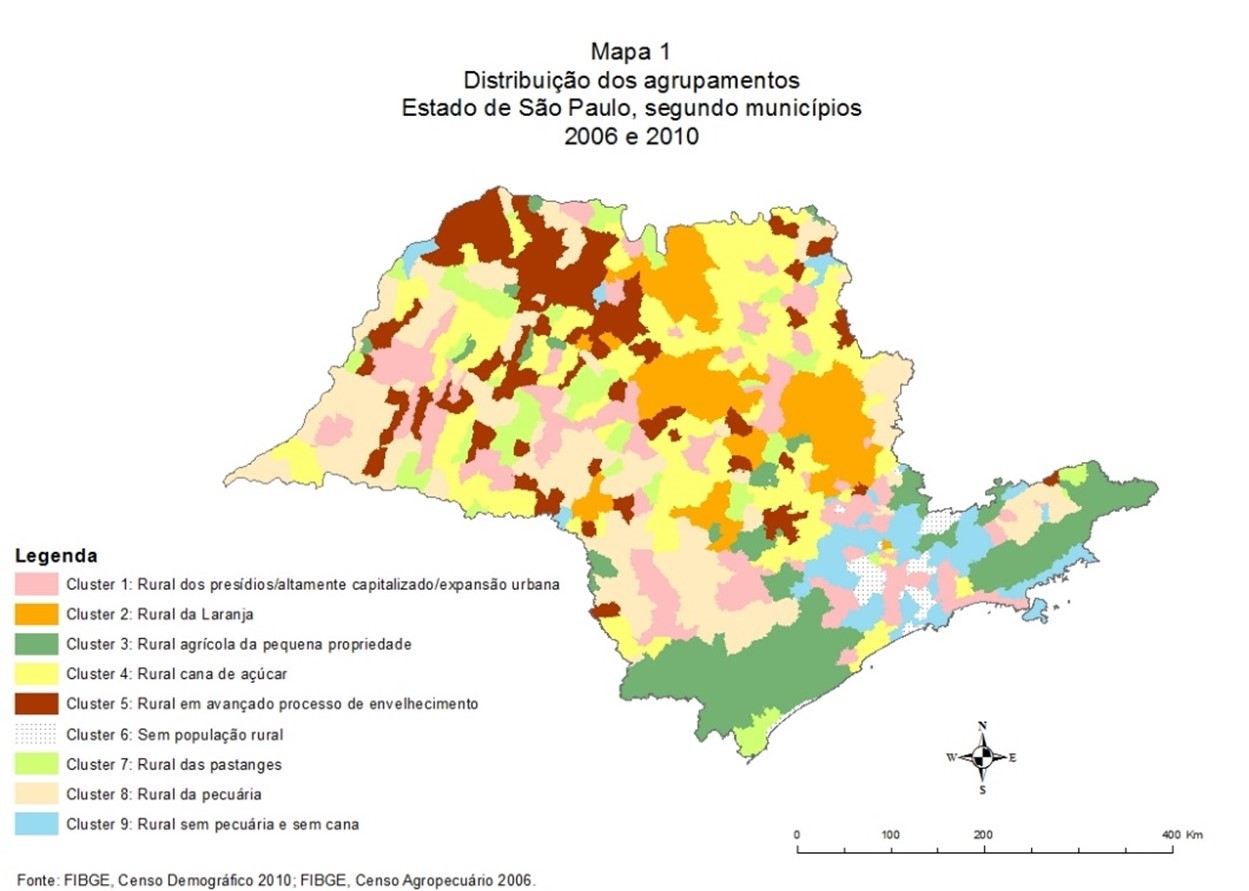
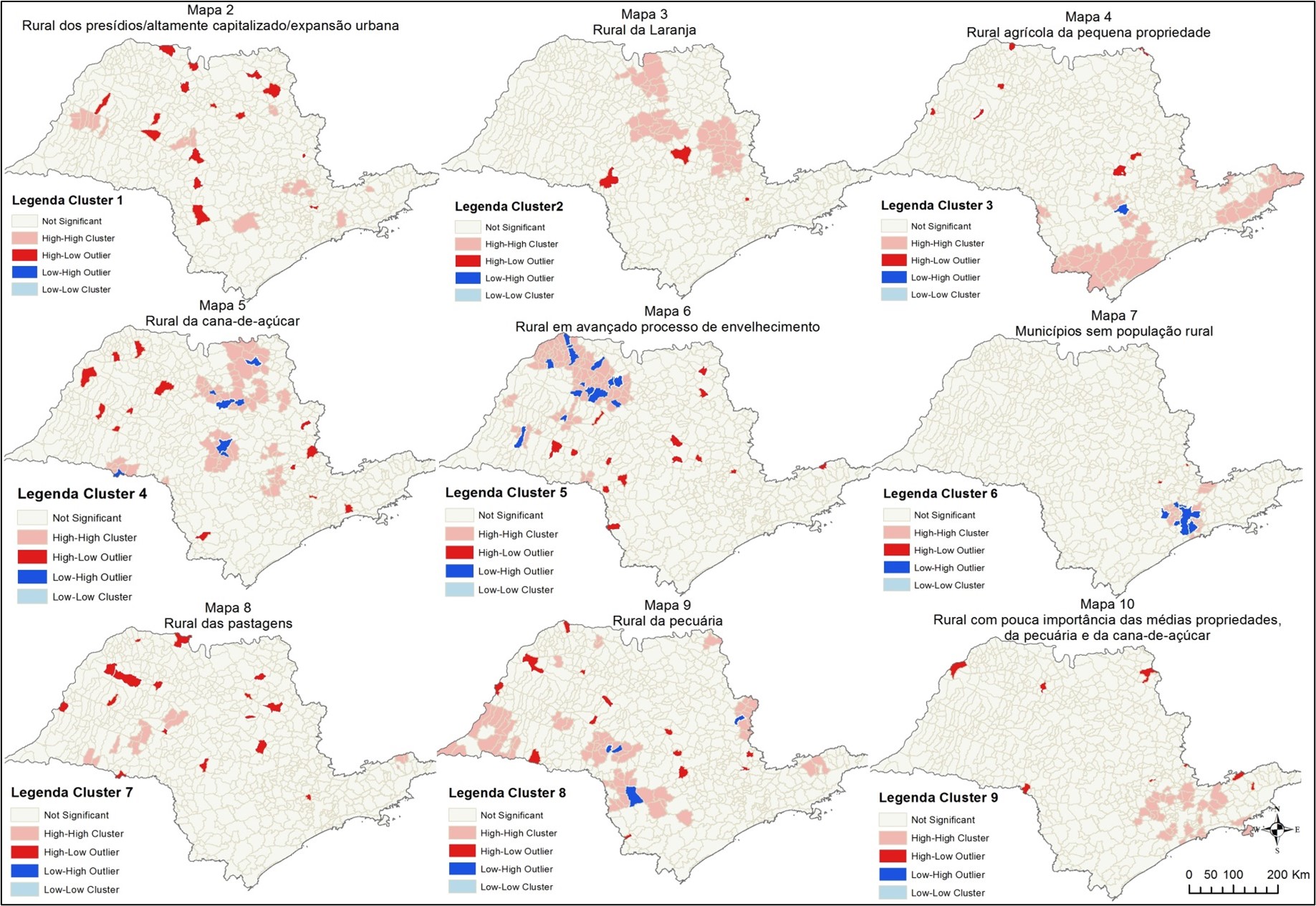
Arranjos urbanos-rurais regionais em São Paulo: um exercício de análise espacial. VII Congresso da Associação Latino-americana de População e XX Encontro Nacional de Estudos Populacionais.
AbstractEsse trabalho apresenta uma discussão metodológica de como apreender a heterogeneidade do rural paulista a partir da integração de dados dos Censos Agropecuário e Demográfico. O objetivo é explorar técnicas de análise multivariada e espacial que auxiliem na apreensão do rural como construção socioespacial, estruturado por fluxos que extrapolam a produção estritamente agropecuária e remetem a diferentes dinâmicas de redistribuição de população. O artigo está dividido em cinco partes principais. Na introdução, é explicitado a perspectiva teórica do trabalho. Em seguida, apresentam-se as variáveis utilizadas, o tratamento dado aos casos perdidos, avaliação das distribuições e correlações. Na terceira parte, recorre-se à análise fatorial como de reduzir o conjunto de indicadores iniciais em constructos fracamente correlacionados. No item quatro, os fatores criados são submetidos a uma análise classificatória de cluster que, na quinta e última parte, é interpretada espacialmente. A título de considerações finais, é reiterada a multiplicidade de formas com que o rural regional se conecta ao urbano local, de modo a reforçar a centralidade dos processos históricos na articulação de diferentes espaços rurais.
DAGNINO, RS, D’ANTONA AO.
2016.
Atlas do Observatório das Migrações em São Paulo. , Campinas: Laboratório Urbanização e Mudanças no Uso e Cobertura da Terra (l-UM), Faculdade de Ciências Aplicadas; Núcleo de Estudos de População "Elza Berquó" (Nepo) – Universidade Estadual de Campinas (Unicamp).
Montanari, T.
2016.
auladehisto. , Porto Alegre: Ed. da autora
 ]
]